
Selling your house isn’t always as straightforward as listing it on the market and waiting for the right buyer to come along. Maybe you’ve dealt with lowball offers, buyers backing out at the last minute, or a home that just isn’t getting the attention you expected. If that sounds familiar, you might be wondering if there’s a different way to sell, one that opens the door to more potential buyers.
That’s where a lease purchase agreement comes in.
At a glance, it can sound like the best of both worlds. You collect income now, attract buyers who can’t qualify for a mortgage yet, and potentially lock in a sale down the line. But here’s the part many sellers don’t realize upfront: while a lease purchase agreement can work well in certain situations, it also comes with delays, risks, and added complexity that aren’t always obvious at first.
In this guide, we’ll break down exactly how a lease purchase agreement works from a seller’s perspective, the real pros and cons, and whether it’s actually a good fit for your situation. Let's dive in.

What Is a Lease Purchase Agreement?
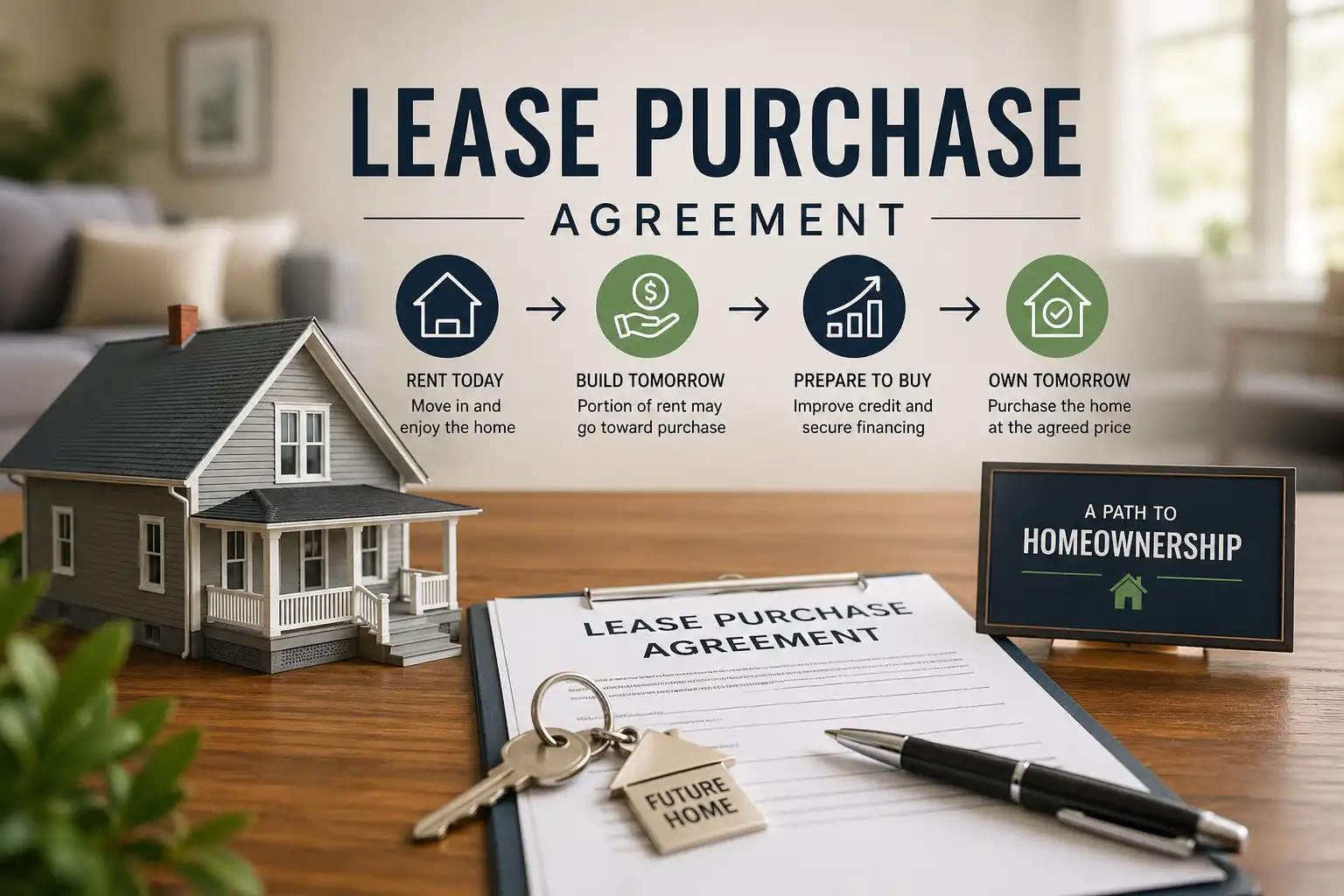
How Does a Lease Purchase Agreement Work?
From a seller’s perspective, a lease purchase agreement is less about “selling today” and more about setting up a sale that happens later—while generating income in the meantime.
Here’s how it typically plays out step by step:
- You find a tenant-buyer
Instead of a traditional buyer, you’re working with someone who likely can’t qualify for a mortgage yet but plans to in the near future. - You agree on the terms upfront
This includes the future purchase price, lease term (usually 12–36 months), monthly rent, and how much will be credited toward the purchase. - You collect an upfront option fee
The buyer typically pays 1%–5% of the purchase price upfront. This money is usually non-refundable and shows they’re serious about buying. - You receive monthly income (often above market rent)
Lease purchase agreements often include a rent premium. For example, if market rent is $1,800, you might charge $2,000–$2,200, with a portion potentially credited toward the future purchase. - The tenant-buyer lives in the home during the lease period
In many cases, they’ll also take on more responsibility for maintenance and upkeep compared to a typical renter. - The buyer works toward qualifying for a mortgage
During the lease term, they’re expected to improve their credit, save money, and prepare to secure financing. - The sale happens at the end of the lease
If everything goes as planned, the buyer gets approved for a loan and purchases the property at the agreed-upon price. - If the buyer doesn’t follow through…
This is where things can go differently:- You typically keep the option fee
- You may also keep any rent credits
- You still own the property and may need to start the process over
At its core, a lease purchase agreement is a delayed sale with built-in uncertainty. It can create a path to sell your home, but it’s not guaranteed.
That’s why understanding the pros and cons is critical before deciding if this strategy actually makes sense for you.
How to Structure a Lease Purchase Agreement
If you’re considering using a lease purchase agreement to sell your house, the way you structure the deal is everything.
It’s highly recommended that you work with a real estate attorney when putting this type of agreement together. Unlike a standard lease or even a lease option, a lease purchase creates a stronger commitment between both parties.
A well-structured agreement can generate income and lead to a successful sale. A poorly structured one can lead to delays, confusion, or a deal that falls apart when it matters most.
Here are the key components every seller should carefully think through:
Purchase price:
Your agreement should clearly state the final purchase price and how that price will be determined. Many sellers choose to set the price slightly above current market value to account for appreciation, but it still needs to be realistic enough for the buyer to qualify when the time comes.
Lease term:
Most lease purchase agreements last between 12 and 36 months. This gives the buyer time to improve their credit and prepare for financing, while still keeping a defined timeline for your sale.
Option fee (upfront payment):
The buyer typically pays an upfront, non-refundable fee—usually around 1%–5% of the purchase price. This provides immediate cash and helps ensure the buyer is serious about following through.
Monthly rent and rent credits:
In many cases, you can charge slightly above market rent, with a portion going toward the purchase. These credits can help motivate the buyer, but if they don’t complete the purchase, they’re usually forfeited.
Financing expectations and buyer commitment:
This is where a lease purchase differs from a lease option. In most cases, the buyer is expected to follow through with the purchase at the end of the lease.
Because of that, it’s important to outline expectations around:
- When they should begin working with a lender
- Progress toward improving credit or finances
- What happens if they’re unable to secure financing
Maintenance and responsibilities:
Since the tenant plans to become the owner, many agreements shift more responsibility to them. Your contract should clearly define:
- Who handles day-to-day maintenance
- Who pays for major repairs (roof, HVAC, etc.)
- Utilities, HOA fees, and other ongoing costs
Default clauses and legal protections:
Because this agreement is more binding, your protections matter even more. Be clear about:
- What happens if payments are missed
- What happens if the buyer can’t complete the purchase
- What funds (option fee, rent credits) you retain
Pros and Cons of Selling Your Home With a Lease Purchase Agreement
Before deciding if a lease purchase agreement is the right way to sell your house, it’s important to look at both sides of the equation.
On paper, this strategy can seem like a win-win scenario: you generate income, attract more buyers, and potentially lock in a future sale. But in reality, there are trade-offs that many sellers don’t fully consider until they’re already in the middle of the agreement.
Like any real estate strategy, a lease purchase agreement comes with clear advantages and real risks. Understanding both will help you make a more informed decision and avoid surprises down the road.
Advantages of Lease Purchase Agreements
For the right seller, a lease purchase agreement can offer some real advantages, especially if your home isn’t selling through traditional methods.
Here are some of the biggest benefits:
- Attract a larger pool of buyers
You’re not limited to fully qualified buyers. Lease purchase agreements open the door to people who have income but need time to improve their credit or save for a down payment—expanding your buyer pool significantly. - Collect an upfront option fee
Most agreements include a non-refundable option fee (typically 1%–5% of the purchase price). This gives you immediate cash and helps ensure the buyer is serious. - Generate steady monthly income
You’ll receive rent payments during the lease term—often above market rent—which can create strong cash flow while you wait for the sale to close. - Potential to sell at a higher price
Many sellers set the purchase price slightly above current market value to account for future appreciation, which can lead to a better overall sale price. - Tenant-buyer may take better care of the property
Because they plan to own the home, tenant-buyers are often more invested in maintaining it compared to a traditional renter. -
You may keep funds if the deal falls through
If the buyer doesn’t end up purchasing, you typically keep the option fee and any rent credits that were applied toward the purchase.
While these benefits can make a lease purchase agreement appealing, they don’t come without trade-offs. In many cases, the downsides are what determine whether this strategy truly makes sense.
Disadvantages of Lease Purchase Agreements
While lease purchase agreements can sound appealing on the surface, there are some real downsides that sellers need to understand before moving forward. In many cases, these are the factors that end up making or breaking the deal.
- You’re delaying the sale, not completing it
One of the biggest drawbacks is that you’re not actually selling your house today. Instead, you’re agreeing to sell it months—or even years—down the line. If you need cash quickly, this can be a major disadvantage. - There’s no guarantee the buyer will actually buy
Even though a lease purchase agreement is more binding than a lease option, the reality is many buyers still fail to secure financing. If that happens, the deal can fall apart—leaving you back at square one. - You’re still responsible for the property
Until the sale is finalized, you remain the legal owner. That means you may still be on the hook for property taxes, insurance, and any major repairs - Contracts can get complicated
These agreements often combine a lease and a purchase contract, with clauses that tie them together. If they’re not structured properly, it can lead to confusion, disputes, or even legal issues down the road. - You’re locking in a future sale price
While locking in a price can be beneficial in some cases, it can also backfire. If property values rise significantly, you may be stuck selling below market value. - Potential for tenant-buyer issues
Even though tenant-buyers tend to be more responsible, they’re still tenants. Missed payments, property damage, or disagreements over responsibilities can still happen. - You may have to start over if the deal falls through
If the buyer can’t follow through, you’ll need to start the process all over again.
FINAL THOUGHTS
A lease purchase agreement can be a useful tool. But is it the right move for you?
For some sellers, it creates an opportunity to generate income, attract more buyers, and work toward a future sale. For others, it can lead to delays, uncertainty, and deals that never actually close.
At the end of the day, it really comes down to your situation:
- If you don’t need to sell right away and are comfortable waiting, a lease purchase could be worth considering
- If you’re looking for certainty, speed, and a clean break, it may not be the best fit
The biggest thing to keep in mind is this:
A lease purchase agreement is not a guaranteed sale, it’s a potential sale down the road.
That means before moving forward, you should weigh the time, risk, and complexity involved against your goals as a homeowner.
If your priority is to sell quickly and move on without the uncertainty, there are other options available that may better fit your situation.
If you are considering selling your house fast in Las Vegas, working with a Cash Home Buyer might be your best bet. Feel free to reach out to us with your free consult anytime.
Learn More About Us!
Come visit us in our About Us page to learn more about your local homebuying couple!
Learn more what our company is all about, we can't wait to chat with you soon 🙂

The Best Way To Sell Your House Fast
Are you looking to sell your house? Our friendly team at 702 Cash Buyers is here to help you through every step of the process. We buy houses in Las Vegas NV. Join our community of satisfied sellers who have successfully sold their houses to us. Let's work together to make your property selling experience easy and stress-free. Click on the button below to get started!